Memphis University Catches a Storm Flood in 94 Seconds
Ten campus buildings, one facilities team, and a Memphis downpour
A private university in Memphis, TN runs a wooded campus in the heart of the city. There are academic halls, a library, a gym and arena, and an engineering building. Behind them sit the boiler rooms, janitor closets, and mechanical spaces that keep a campus running. Water trouble rarely starts where someone is standing. It starts under a door during a storm. It starts at a sink over a break, or in a rooftop mechanical room no one visits.
Memphis weather raises the stakes. On July 7, 2026, the facilities team estimated rain was falling at more than an inch per hour. In that kind of downpour, water finds every low threshold. And in Memphis humidity, wet floors and baseboards do not just dry out. They become a mold problem within days.
Flood sensors where campus water damage starts
In October 2025, the university installed 84 Floodie flood sensors across 10 buildings, linked by eight Sensor Relay communication hubs. The Floodies sit where water shows up first: boiler rooms, mechanical rooms, janitor closets, kitchens, a laundry room, and the floors around IT gear. The moment water touches a floor, the nearest Floodie catches it. The AlertAQ™ platform tells the team which building and which room.
One storm, three buildings, 94 seconds to detection
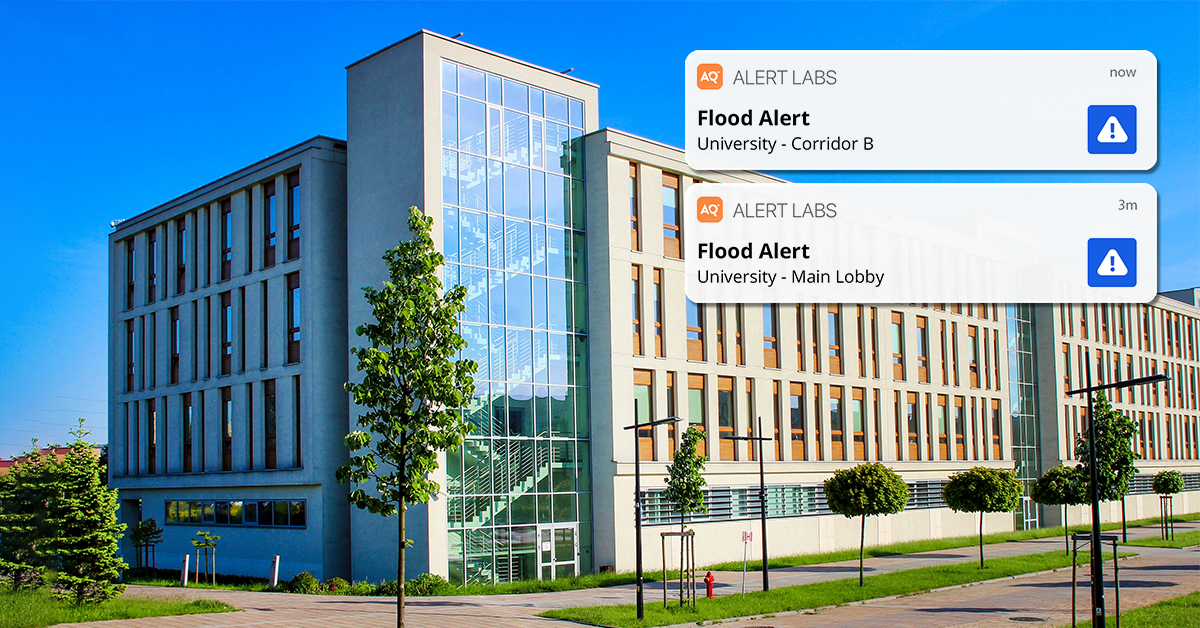
At the height of the July 7 storm, water pushed under the entry doors of three buildings that total roughly 131,000 sq ft. The first flood alert fired as water reached the floor. The third fired 94 seconds later. In one hall, water ran along the first floor and into the corridors before a sensor caught it. Two of the alerts came from rooms that house fire alarm panels, rooms with closed doors that no one checks in a storm.
We pulled baseboards, dried out the floors and vacuumed up the water immediately, then called contractors to help with remediation.
A winter break water leak resolved in 12 hours, not weeks
The storm was the biggest event in a busy first year, but the clearest win came when almost no one was there to see it. Days before Christmas, a sink leak started beside an IT area. The campus was nearly empty for winter break. The leak was resolved 12 hours later. Without the alert, that water had weeks to run before anyone walked past.
The rest of the year filled in the pattern. Between November 2025 and July 2026, the campus logged 37 flood alerts across seven of its 10 monitored buildings. In July, a hose bib valve was left open in a rooftop mechanical room. The water was caught the same day. And one janitor closet sink kept alerting through the winter. The repeat record gave the team proof of a chronic problem worth a permanent fix. That sensor has not raised a flood alert since March.
Look after every building
The campus in this success story is insured by a national insurance carrier working with Alert Labs to improve its water loss prevention strategy. A campus is too big to watch in person, and water does not wait for rounds. Book a Demo to see how Alert Labs water management solutions give facilities teams eyes on every building, in every storm.