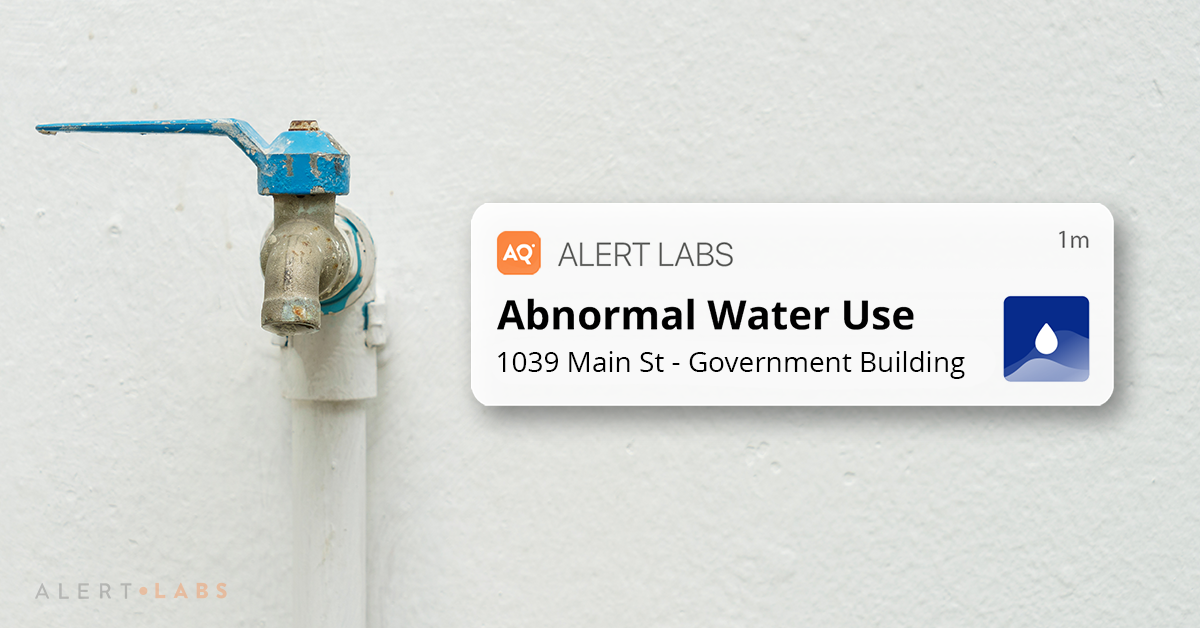
How to Choose a Water Leak Sensor for Commercial Buildings (2026 Guide)

Choosing a water leak sensor comes down to three decisions: the detection type (flow-based sensor, spot detector, or automatic shut-off valve), the connectivity (cellular or Wi-Fi), and whether you need a commercial-grade platform or a consumer puck. Get those three right first. Brands and prices only make sense after that.
This guide walks through each decision, then gives you a checklist of 10 questions to ask any vendor — including us.
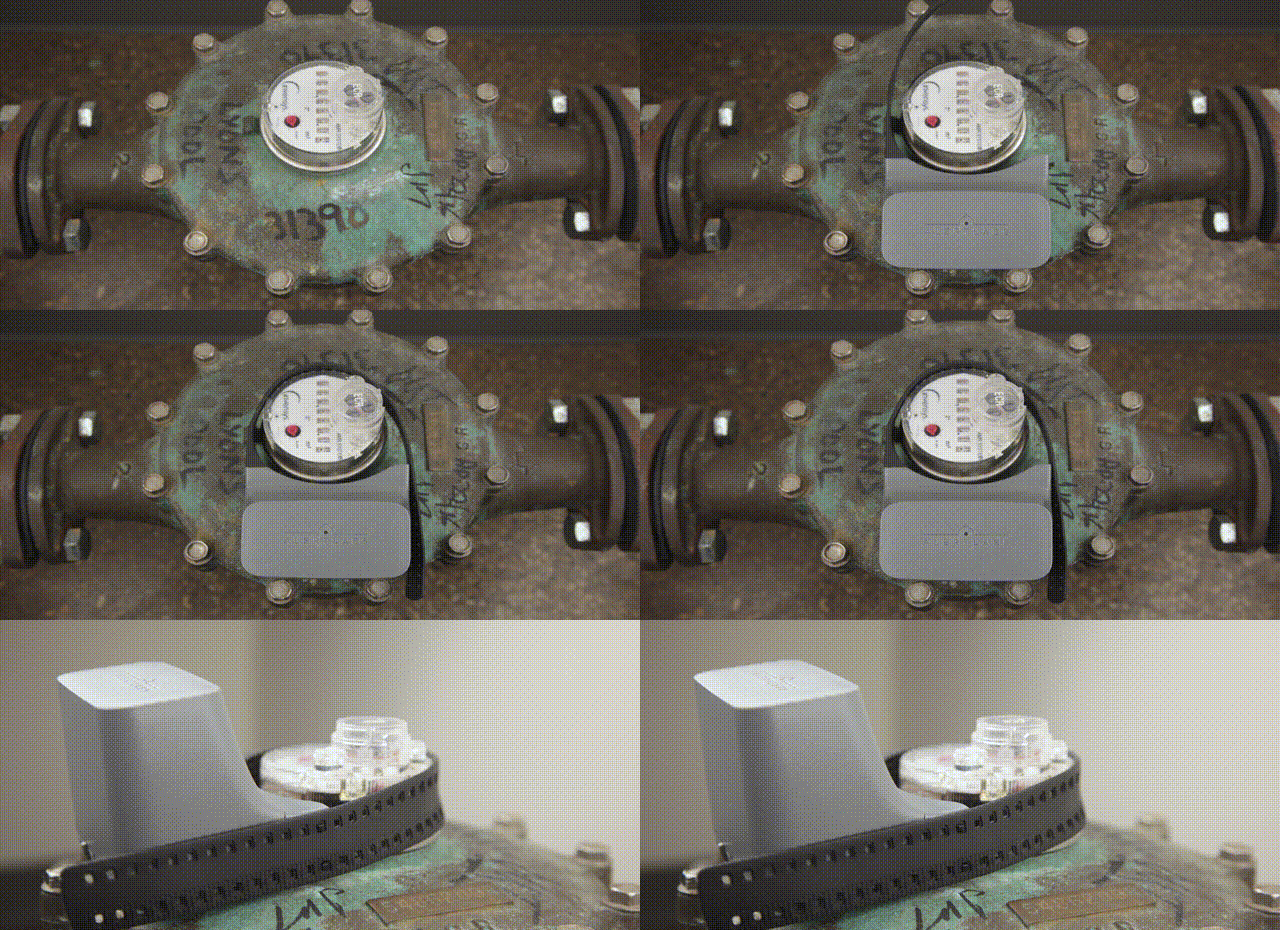
The three types of water leak sensor (and what each one catches)
Most buyers compare brands before they compare types. That's backwards. Each type catches a different kind of water problem, and most commercial buildings need more than one.
The short version: flow sensors find the leaks you can't see, spot detectors catch the water you'd otherwise find too late, and shut-off valves act on both. A building protected by all three has detection and response covered. For the response half, see 4 water shut-off strategies for commercial buildings.
Commercial-grade vs. the $20 Wi-Fi puck
Search for "water leak sensor" and most results are consumer gear: a small Wi-Fi puck that beeps or pings your phone when it gets wet. For a house, fine. For a portfolio, four things break down:
One dashboard for every building. Consumer pucks are managed one building — often one phone — at a time. A commercial platform gives you a single pane of glass: every property, every sensor, every alert, one login. You can compare buildings, spot the outliers, and rank the work orders instead of chasing pings. That's the core of commercial water leak detection.
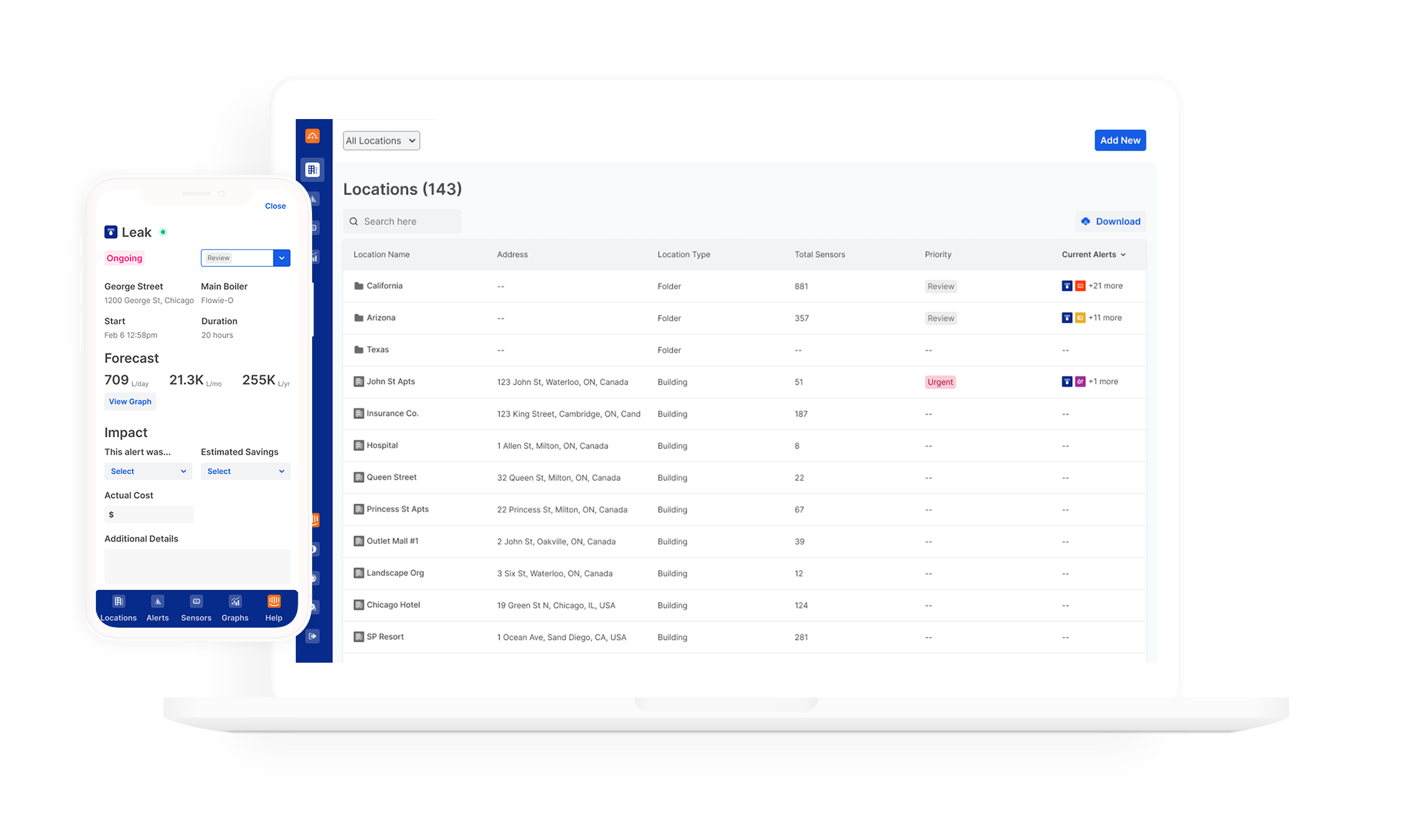
Alerts routed by role and schedule. A consumer puck pings whoever installed the app. A commercial platform sends each alert to the right person: the on-site engineer by day, the on-call staffer after hours, the regional manager for repeat problems. That matters, because most water events don't wait for business hours (see the data below).
A connection that doesn't depend on the building. Consumer pucks need Wi-Fi. Commercial-grade sensors use cellular with battery backup. They keep working through power outages, network changes, and IT reviews — and in vacant buildings with no network at all. Nobody walks a vacant building at midnight. Your sensors do.

Support behind the hardware. When a consumer puck goes quiet, you find out during the next flood. A commercial platform checks its own sensors' health and flags the ones that need attention — and there's a support team to call, seven days a week.
None of this means consumer pucks are junk. They just answer a different question. If you carry the water risk for more than one building, you're a commercial buyer — even if the search results don't say so.
The 10-point vendor checklist
These are the criteria that separate vendors once you've picked your sensor types. Take the table into every demo.
If a vendor can't answer one of these, that's your answer.
Evaluating for a multi-site portfolio with a command center? That's a bigger checklist. Start with the enterprise leak detection requirements, or download the Enterprise Leak Detection Requirements Checklist for vendor evaluations.
What commercial leak detection costs
Most commercial systems price the same way: hardware up front, plus a yearly subscription per device. What the subscription buys is the part vendors explain badly, so here it is plainly. The sensors are the hardware. The subscription is everything that turns their readings into action: the AlertAQ platform and its dashboard, the alerts, the analytics that learn each building's normal water pattern, the software and firmware updates that keep making detection better, compliance reports, and a support team you can reach seven days a week.
One question worth asking any vendor — including us: what exactly does the subscription include, and how does pricing work as buildings are added? A vendor confident in its pricing will answer in plain language.
For scale: the subscription typically runs a small fraction of a building's yearly water bill. One found leak usually covers it.
What the data says about commercial water leaks
Numbers from the 2026 State of Water Management Report, based on 480,000+ alerts across 14,000+ monitored buildings:
- 56% of floods happen after hours — when nobody is in the building to notice.
- Monitored buildings had a median response time of 57 minutes from alert to action.
- 1 in 4 monitored buildings had a flood event in 2025.
Across everything Alert Labs monitors — 15,000+ buildings and counting — customers have avoided more than $150 million in damage, waste, and water costs.
That after-hours number is the one to sit with. Whatever sensor you choose, ask who gets the alert at 2 a.m., and what happens next.
FAQ
What's the difference between a water leak sensor and a flood sensor?
A water leak sensor tracks flow on the water line and flags unusual use, so it catches hidden leaks like running toilets or pinhole pipe leaks before there's visible damage. A flood sensor detects water that has already escaped — on a floor or in a drip pan. Commercial buildings typically need both.
Do water leak sensors need Wi-Fi?
Consumer sensors usually do. Commercial-grade sensors use cellular connections instead, so they need no Wi-Fi, no wired network, and no IT approval — and battery backup keeps them working through power outages. That also means they work in vacant buildings and construction sites where no network exists.
Can a water leak sensor shut off the water automatically?
Not by itself — sensors detect, they don't act. Paired with an automatic shut-off valve, the system can close the water line the moment a leak is detected, with no one on site. Commercial shut-off valves like Shuttie install on pipes up to 6 inches.
How much does commercial water leak detection cost?
Commercial systems price as hardware up front plus a yearly per-device subscription. The subscription covers the platform: alerts, analytics, software and firmware updates, compliance reporting, and support seven days a week. It typically runs a small fraction of a building's yearly water bill — and one found leak usually covers it.